Shloka 9.1
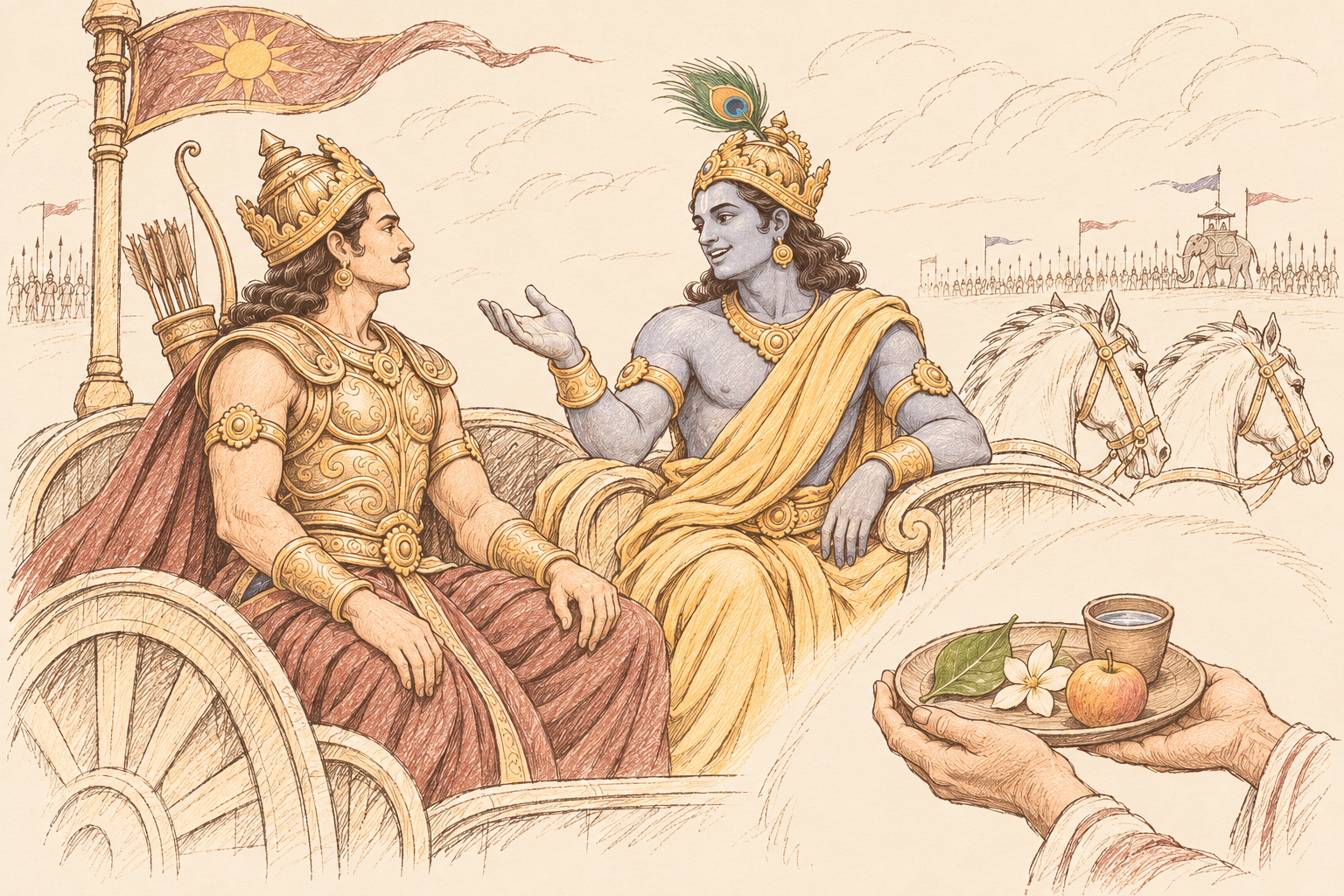
श्रीभगवानुवाच इदं तु ते गुह्यतमं प्रवक्ष्याम्यनसूयवे । ज्ञानं विज्ञानसहितं यज्ज्ञात्वा मोक्ष्यसेऽशुभात् ॥९-१॥
पदच्छेद
श्रीभगवान् उवाच इदम् तु ते गुह्यतमम् प्रवक्ष्यामि अनसूयवे ज्ञानम् विज्ञान-सहितम् यत् ज्ञात्वा मोक्ष्यसे अशुभात्
Padaccheda
śrībhagavān uvāca idam tu te guhyatamam pravakṣyāmi anasūyave jñānam vijñāna-sahitam yat jñātvā mokṣyase aśubhāt
अन्वय
श्रीभगवान् उवाच-अनसूयवे ते इदम् गुह्यतमम् विज्ञानसहितम् ज्ञानम् तु प्रवक्ष्यामि, यत् ज्ञात्वा अशुभात् मोक्ष्यसे ।
Anvaya
śrībhagavān uvāca-anasūyave te idam guhyatamam vijñānasahitam jñānam tu pravakṣyāmi, yat jñātvā aśubhāt mokṣyase ।
अर्थ
श्रीभगवान ने कहा: तुम दोषदृष्टि नहीं रखते, इसलिए मैं तुम्हें यह अत्यन्त गूढ़ ज्ञान अनुभवगत बोध सहित बताऊँगा। इसे जानकर तुम अशुभ से मुक्त हो जाओगे।
Meaning
The Lord says: Because you are free of a fault-finding attitude, I will explain this most inward knowledge to you, together with realised understanding. Knowing it, you will be released from what is harmful.
श्रीभगवान्
श्रीभगवान् (कृष्ण)
śrībhagavān
the Blessed Lord (Krishna)
व्याकरण
मूल: भगवत्। पुल्लिंग · प्रथमा · एकवचन।
Grammar
Base: भगवत्. masculine · nominative · singular.
उवाच
कहा
uvāca
said
व्याकरण
मूल: वच्। लिट् (परोक्ष भूत) · प्रथमपुरुष · एकवचन · परस्मैपद।
Grammar
Base: वच्. perfect · third person · singular · parasmaipada (active endings).
इदम्
इस
idam
this
व्याकरण
मूल: इदम्। नपुंसकलिंग · द्वितीया · एकवचन।
Grammar
Base: इदम्. neuter · accusative · singular.
तु
कि
tu
but
व्याकरण
मूल: तु। अव्यय; रूप नहीं बदलता।
Grammar
Base: तु. indeclinable; its form does not change.
इस वाक्य में
पिछली बात से भेद या विरोध का संकेत देता है।
In this sentence
It marks a contrast with the preceding statement.
ते
तुझको
te
unto you
व्याकरण
मूल: युष्मद्। चतुर्थी · एकवचन।
Grammar
Base: युष्मद्. dative · singular.
गुह्यतमम्
परम गोपनीय
guhyatamam
the most confidential
व्याकरण
मूल: गुह्यतम। नपुंसकलिंग · द्वितीया · एकवचन।
Grammar
Base: गुह्यतम. neuter · accusative · singular.
प्रवक्ष्यामि
भलीभाँति कहूँगा
pravakṣyāmi
am speaking
व्याकरण
मूल: प्र वच्। लृट् (भविष्यत्) · उत्तमपुरुष · एकवचन · परस्मैपद।
Grammar
Base: प्र वच्. simple future · first person · singular · parasmaipada (active endings).
संधि-विच्छेदSandhi breakdown
प्रवक्ष्याम्यनसूयवे → प्रवक्ष्यामि + अनसूयवे
अनसूयवे
दोष-दृष्टिरहित भक्त के लिये
anasūyave
to the nonenvious
व्याकरण
मूल: न-असूयु। पुल्लिंग · चतुर्थी · एकवचन।
Grammar
Base: न-असूयु. masculine · dative · singular.
समास-विग्रह
अनसूयवे · न असूयुः = अनसूयुः तस्मै अनसूयवे नञ् तत्पुरुष। दोष-दृष्टिरहित भक्त के लिये
Compound analysis
negative tatpuruṣa. to the nonenvious
ज्ञानम्
ज्ञान को
jñānam
knowledge
व्याकरण
मूल: ज्ञान। नपुंसकलिंग · द्वितीया · एकवचन।
Grammar
Base: ज्ञान. neuter · accusative · singular.
विज्ञान-सहितम्
विज्ञानसहित
vijñāna-sahitam
with realized knowledge
व्याकरण
मूल: विज्ञान-सहित। नपुंसकलिंग · द्वितीया · एकवचन।
Grammar
Base: विज्ञान-सहित. neuter · accusative · singular.
समास-विग्रह
विज्ञान-सहितम् · ज्ञानम् च विज्ञानम् च = ज्ञानविज्ञाने, ज्ञानविज्ञानेन सहितं = ज्ञानविज्ञानसहितं तृतीया तत्पुरुष। विज्ञानसहित
Compound analysis
instrumental tatpuruṣa. with realized knowledge
यत्
जिसको
yat
which
व्याकरण
मूल: यद्। नपुंसकलिंग · द्वितीया · एकवचन।
Grammar
Base: यद्. neuter · accusative · singular.
ज्ञात्वा
जानकर
jñātvā
knowing
व्याकरण
मूल: ज्ञा। क्त्वा-प्रत्ययान्त अव्यय; पहले पूरी हुई क्रिया।
Grammar
Base: ज्ञा. indeclinable gerund; an action completed before the main verb.
मोक्ष्यसे
मुक्त हो जायगा
mokṣyase
be released
व्याकरण
मूल: मुच्। लृट् (भविष्यत्) · मध्यमपुरुष · एकवचन · आत्मनेपद।
Grammar
Base: मुच्. simple future · second person · singular · ātmanepada (middle endings).
संधि-विच्छेदSandhi breakdown
मोक्ष्यसेऽशुभात् → मोक्ष्यसे + अशुभात्
अशुभात्
दुःखरूप संसार से
aśubhāt
from this miserable material existence
व्याकरण
मूल: अशुभ। पुल्लिंग · पञ्चमी · एकवचन।
Grammar
Base: अशुभ. masculine · ablative · singular.
समास-विग्रह
अशुभात् · न शुभम् = अशुभम् तस्मात् अशुभात् नञ् तत्पुरुष। दुःखरूप संसार से
Compound analysis
negative tatpuruṣa. from this miserable material existence
व्याख्या
Explanation
प्रसंग
कृष्ण अर्जुन की दोषदृष्टिरहित सुनने की पात्रता को संबोधित करते हैं।
Context
Krishna addresses Arjuna as a listener free from fault-finding.
सरल व्याख्या
ज्ञान और विज्ञान फिर साथ आते हैं; आगे का शिक्षण सूचना से अधिक यथार्थ-बोध का विषय है।
Simple explanation
Knowledge and realized understanding appear together again; the teaching concerns recognition of reality, beyond information alone.